Hegel Today

Theology Today – Post-Hegel; Post-Kierkegaard
I want to consider how one thinking theologically might draw upon Hegel, but to do so in a way that both moves with him and moves against him.[1] The point of these final reflections is to meet Hegel on his ground and learn as Christian thinkers from a man who was not an enemy of the Christian faith and life. Had Hegel provided only a system, it would be relegated to a museum. More importantly, the way he pursued the system continues to provide a way for theology. Certainly, Hegel’s first total philosophical project is in many ways, from both the philosophical and the theological aspects, a problematic enterprise. We can look at how Hegel approached the nature and character of God through a modern lens.
The issues here are difficult. Here are two. In the ontic perspective, orthodox theology would see all God-world occurrences as based on God's free grace, that God chooses rather than being chained, instead of speculative necessity, which would suggest that God could not create. In the noetic, ethical perspective, orthodox theology would see all God-world mystery as based on trusting faith that points to love, instead of on absolute knowledge, presuming one can think one’s way to the Absolute. I will be suggesting ways in which Hegel invites a reconsideration of these two issues.
Such difficulties advance when we consider that Hegel reconsiders religious language itself. Hegel can be challenged that theology points to a conceptual consideration of God. So much of religion focuses upon religious experience, religious involvement as discipleship and the formation of community, and the formation of creeds and doctrinal statements. The world may not need more metaphysics, but it could use less fluff. His example of thinking through every facet of Christian life and thought philosophically cleans out half-baked reflections. He remains a valuable guide in this.
Among the biggest knots to untangle with Hegel is the collapse of the distinction between subject and object. He is suggesting that there is no isolated observer (subject) of the world (object). If you are aware, you cannot be split into me and world anymore. There is no gap. Once subject and object embrace, there is no longer an observer and an observed, but only experience, life happening to itself. Knower and known fuse.
Another difficult knot is the monism of the Absolute, in which he envisions the dialectic resolved or reconciled in differentiated unity. This is the result of his emphasis on a philosophy of becoming, which led to his emphasis upon the whole or the system existing in relatedness. It leads him to refer to the slaughter-bench of human history while believing that his philosophy of history is a justification of God. For many persons, suffering is a deal-breaker with believing in God. For Hegel, suffering, the negative, becomes necessary for the emergence of Spirit. Believers in God must deal with such suffering, violence, and tragedy, but Hegel may go too far. At the same time, most of us have thought of how difficulties we faced in life were the greatest motivators to grow. The same can be said of nations.
Still another difficult knot is that he viewed his philosophical system of reconciliation of opposition as an arrival of the end, so that he could look back and see how Truth, Goodness, and Beauty showed themselves in human consciousness, in nature, and in human history. His dialectic needs to become open, introducing ambiguity into any dialectical analysis of any situation. Although this seems arrogant, it has the humble dimension of noticing how the Absolute necessarily works itself out in the messiness of history. He found the pulse of history in the messy path of dialectic.
I will not pretend to untie the knots and difficulties, but I would like to use them to point to ways in which orthodox theology could move against its anti-Hegel instinct and learn a new way to express its beliefs in a new cultural setting.
To engage in this reconsideration of orthodox theology through Hegel, we need to transform the Hegelian dialectic. As we do so, it might offer the possibility for a theologian moving in a different direction than does Hegel.
The mature Hegel focused on knowing and the process of knowledge. I discussed the dialectic at the beginning of my consideration of The System. Now, we need to consider that there are problems with focusing so much upon knowledge. The young Hegel may well have had an answer in the sense that the young Hegel focused on a dialectic of love. The early Hegel wrote gorgeous fragments about love as the true dialectic: difference is not crushed, but caressed, melting back into unity without violence. The other is a friend rather than an obstacle. You are I and I am you, and we will never be the same. No thesis crushing antithesis; just two hearts swallowing each other. Later, the world happened as he saw the battlefield and dead friends. Love started sounding too quiet for battlefields. Love is too soft for history. He gave the dialectic armor. He traded that for Geist marching through war and thought.
Here is the problem with a dialectic of knowing. A dialectic of mere knowledge cannot recognize aright the being of the other. And on account of this one-sidedly cognitive basic structure, Hegel's dialectic is restricted to a merely formal knowledge of essence. All knowledge of being presupposes in the knowing agent a fundamental and radical openness and readiness for the letting be of what is, and from first to last of being in general. This attitude is basically one of intentional surrender to the being itself, which receives, supports, and anticipates the subject, and so long as the freedom of the knowing agent does not turn into guilt, it ripens into free loving devotion to affirm in oneself the other thing and supremely the other person is exclusively at work, a work of the will and of the purest and fullest form of the will, namely love. The point is, even in his dialectic of knowing, love is the real dialectic in that the other does not get negated, but is kept, held, and desired. Spirit does not conquer so much as lean in.
Hegel saw reconciliation occurring in the tense and violent dialectical process. I want to look closer at what motivated him to do so.
The relation between the secular and religious worlds were undergoing change, as they do in every generation. Hegel dealt with that tension in a way that might help theologians in every generation. Hegel told the emerging secular world that he did not want the world to become godless, but he told religious world, the church with which many of his contemporaries were bored and even traumatized, that he did not want God to become unworldly. If the world turns into some cold, efficient machine, or God floats off into pure but useless spirit, we are all left dangling. World without God is a corpse. God without world is a ghost. But Hegel keeps them stitched together-Christ is the knot.
Many educated Christians, philosophers and theologians at that time were grateful to Hegel for it. We do justice to Hegel only if we do not forget that he is arguing in the light of a different, transformed, deepened, modern notion of God. And we can scarcely oppose him simply by invoking the God of the Fathers and of Jesus Christ, if we do not at least consider how much of the biblical image of God belongs to a particular world picture.
Hegel was determined to take seriously the Copernican turning point: in the physical world, that of Copernicus himself, in the mental, that of Descartes and later of Kant. God is not up there, where the sun used to be. The beyond is now within the world. He was a modern thinker through and through, who had finally left behind the image of God belonging to a past age. He had left behind the old naïve, anthropomorphic image of someone dwelling, in a literal or spatial sense, “above” the world (God in heaven), with whom we are in obvious, continual contact. But he had also left behind the more recent rationalistic, Deistic image of a being existing in an intellectual or metaphysical sense “outside” the world (world-architect, clockmaker God), in an extramundane “beyond,” without whom in practice we can get along very well. In that sense, Hegel-like Spinoza, Lessing and Goethe—was interested only in God in the world and in the world in God. Such a view had really nothing to do with atheism or naturalism.
Karl Barth respected Hegel more than any other modern. Hegel thought of a new world breaking in, and we need to clothe it in thought. We may well wonder therefore with Karl Barth why Hegel did not become for Protestant theology what Aquinas had been for Catholic. Why—after the early idealism of Kant’s criticism and the various inspired or near-inspired ventures and projects (Fichte, S. Maimon, the young Schelling, Jacobi)—did not Hegel become what Aquinas, after early scholasticism, learning from Christians and non-Christians, Jews and Arabs, had been for the Middle Ages (and on a lower plane and—compared with Hegel—less original, Christian Wolff for the Enlightenment): the doctor communis, the “universal teacher,” who had sifted the material stacked up by history within and more especially outside the walls, arranged it conceptually in a new form and worked out scientifically and creatively the new comprehensive synthesis that had become necessary, the great new paradigm.
Barth also says that everything that gives theology its splendor and dignity seem honored in Hegelian philosophy. In an age that thought reason and science disposed of God, Hegel found God in an energizing and alive way better than many theologians did. The restlessness of reason is a divine restlessness. Hegel had a sure sense of what was in the air. And what Aquinas modestly and silently accomplished, Hegel—as we can see even from his various inaugural addresses and introductions to his books—declared programmatically: that a new age had dawned, that the older syntheses were no longer adequate, that the time had come for a new recapitulation. John Findlay has a point when he says that if Hegel was nothing better, he was at least a great Christian theologian. Theology is baked in deep in the Hegelian philosophy. However, theology panicked, called Hegelianism speculation, and backed away. Barth knew, however, that when theology loses its nerve, philosophy gets better at being church than does the church.
The continuing concern for precise analysis requires that two notable features receive suitable emphasis. The first is that there is the genuinely Christian starting point of Hegel's existential way of thinking, and the second is that there is the possibility of opening Hegel's system of identity.
These two points, which I will explore, confirms an instinct that I have had that theology does need to be some kind of combination of process thinking with that the notion of an existential encounter, and that if you if you leave off either one, you're really missing an important dimension of taking that proclamation of the kerygma, the proclamation of the early church, and its emphasis upon Christ, and making it relatable to today. Process thinking keeps God moving—really moving—with the world, instead of parked above it like a bored emperor. And the existential punch, the Kierkegaard kick, keeps it from being just abstract motion; it hits your chest. Without process, the encounter turns sentimental: a warm Jesus who never gets his hands dirty. Without the kick, process turns into vague evolution: God as cosmic tinkerer. But put them together, and Christ is not past tense—he is happening. The kerygma is not a slogan; it is a dare: Follow me—now, in traffic, in your job, in whatever you are dodging. That is how the early church survived: they did not explain resurrection, they replayed it. Every meal, every exile. We can still do that. Just stop explaining and start stepping.
In terms of a genuinely Christian way of thinking existentially, there is no going back beyond Kierkegaard and the decisive, the existential encounter with the New Testament message about Christ and the decisive function of faith. Kierkegaard drew the line. You cannot unread him. Once you have felt what it means to choose—alone, in the dark, between faith and nothing—then creeds become secondary. Faith is not knowledge. It is decision. And once you decide, everything else must answer to it, no, there is no going back. The question has been asked, and it is personal.
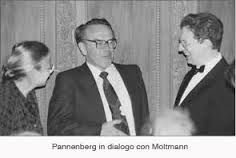
In terms of opening the system of Hegel, Christian theology presupposes the possibility and reality of such a differentiated identity of God and human being, of course in the incarnation in Jesus of Nazareth. God is not timeless fluff, for God has a history. Such an opening leads to a significant role for faith and for the possibilities of the future instead of locking it in. Pannenberg, for example, said history is not yet the self-revelation of God, for that is coming. The resurrection of Jesus is preview. This keeps the future from becoming closed. This keeps the mystery that the dialectic had taken away. Also, philosophy keeps its humility by noticing what is happening, reflecting upon it, but without having to explain it all. This might be more Hegelian than Hegel allowed himself to be. Hegel built a significant porch from which to view what is happening, and that is a humble place from which to reflect.
One way to look upon orthodox theology through the lens of Hegel is to consider panentheism, which is a matter of reconsidering orthodox notions of the transcendence and immanence of God.
A post-Hegelian concept of God would be to leave behind a naïve and anthropomorphic, or even deistic, picture of God. The aim would be to clarify the present systematic state of the Christological problem with reference to Hegel. His concern is the dynamic unity in the living Godhead. The living God is for him the one who moves, changes, and undergoes a history, who does not rigidly remain what he is, but becomes what he is. And he is the God who does not stubbornly remain within divinity in a lofty posture of splendid isolation above the world, but who comes out of divine life, externalizes the divine life in the becoming of the world, a movement which comes to a climax when God becomes a human being. According to Hegel, this God is the true, the Christian God. The true God is the one who, as infinite fullness, comprehends all antitheses within the unity of divine life. God does not dimly hover severed from everything else, as gray absolute, but lives in many forms as the one all-encompassing Spirit. It is the God who does not suffer antitheses to congeal statically in themselves, but thrusts them out into the world, suffering along with them and reconciling them into unity. It is the God who precisely in this externalization into the world, which reaches its revealed pinnacle in the incarnation and the death on the cross, manifests the inmost depths of the heart of God. In brief, according to Hegel, the true God is the one who is both finite and infinite, both God and human being in unity.
Hegel invites us to reconsider Being and Becoming. Hegel molded a consistent and comprehensive metaphysic of becoming, development, history, and life, attempting to assimilate the whole of the antecedent intellectual development and paying particular attention to the concerns of Heraclitus, Eckhart, and Maim. It is chiefly due to him that the nineteenth century became an historical century, with the philosophy of becoming exerting an especially strong influence on Nietzsche, Bergson, Whitehead, and finally on Heidegger. He did turn metaphysics into motion. Before Hegel, being was mostly static. A philosophy which puts the stress on becoming will be disposed to put it also on unity, so that we can discern an affinity between a philosophy of becoming and a philosophy of identity. Similarly, the philosophy of being is often inclined to sunder reality. In the later Plato, the ideas are present in things, and the things share in the ideas by way of communion and imitation, aspiring them to their goal. Aristotle succeeded in bringing Plato's transcendent divine ideas down to earth and transferring them from heaven to the things of this world, yet this only led to the distance between the first principle and the world becoming more unbridgeable still. becoming and identity—they are twins for Hegel. If everything is flowing, then nothing is separate; everything is just the absolute in different moods.
The god of Platonism, Aristotelianism, and Neoplatonism was infinitely remote from the world and truly rigidified in infinitude. It therefore behooves us to keep this god in our mind's eye to get some inkling of the tremendous clang made by the Christian proclamation of the living God who is active in history. The very idea of a creator who directly and immediately intervenes as a living God in the being and becoming of the world, and who not only makes possible the world and its history, but also directs, knows, and loves it, and causes it to be good, stood in sharp contrast to the Greek conception of the rigid transcendence of an immutable God. Yet there was also another and completely unique way in which the idea of a decisive revelation of God in this man, Jesus, of some kind of identification of God and this one man, of the Logos become flesh, was bound to encounter resistance. The one who, in purely transcendent absoluteness, is infinitely alien to the world, and humanity is supposed to reveal itself and a human being to identify itself with a person. The one who abides in unchangeable repose and who knows only himself, and that without motion, is supposed to humble himself to be a man, to assume human nature, to become flesh—that is, a wretched human being. The proclamation and theology of early Christianity had before it the immense task of unleashing the Judeo-Christian belief in God, which was presupposed by the belief in Christ, upon a Hellenistic world of thought. In the ensuing period, we find that the apostolic fathers echo the New Testament in showing occasional connections with philosophical ideas, especially regarding the negative predicates of God—invisible, imperishable, untouchable, unbegotten, immutable, timeless, impassible. Early Christians tried both—sometimes saying God cannot suffer, so the pain was as if, other times letting the nails stay real and admitting God changed. The apostolic fathers grabbed the safest bits: invisible, untouchable—those sounded respectable. But they had to smuggle in the rest: He walked. He wept. He died. And that He was God. The divine heart broke right along with the ribs. Suffering did not happen beside God— it happened in God. Which sounds blasphemous until you realize the only God who could not suffer is the one who could not love us back. Thus, behind that whole debate of whether God suffers is Greek metaphysics, where God had to be immobile and emotionless. The debate was not theology. It was philosophy protecting God from dirt. However, anything less makes the cross a costume. Classical Christian theology itself compels us to think beyond it, and to take it more seriously than it could take itself, insofar it was hampered by the Greek metaphysical concept of God. That is the genius of it. The church fathers borrowed Greek furniture but never noticed how uncomfortable it was for Jesus. So, we must outgrow the room, keep the house. Think what they could not—because if God became human, God cannot be the unmoved mover anymore. God moved. God bled. And if you take incarnation seriously, you must let God feel, let eternity bend, let perfection get messy. Otherwise, you are honoring the idea of Christ, not the man who said My God, why? Classical theology was a first draft. This is the revision.
Hegel invites us to reconsider the orthodox understanding of divine providence considering the power of the negative within the dialectic. Classical theology often pictured providence as a serene, unchanging blueprint—God decreeing all things from eternity with effortless sovereignty, evil permitted but never truly touching the divine life. Yet Hegel’s insistence on the seriousness of negation, the “labor of the negative,” refuses to let evil or suffering remain a mere footnote. The negative is not an external intrusion God merely tolerates; it is the engine by which Spirit advances, the wound through which deeper reconciliation becomes possible. Providence, then, is not a pre-written script executed from afar but the cunning patience of God who enters the fray, allowing contradiction and loss to do their destructive work precisely so that a richer unity can emerge. The cross is the paradigm: not a detour in an otherwise smooth plan, but the moment when God refuses to override negativity and instead absorbs it, transforming death into the birthplace of new life. A post-Hegelian theology of providence would therefore dare to say that God does not merely foresee or permit the negative—God risks it, suffers it, and redeems it from within, ensuring that no tragedy is wasted, no Good Friday left without its Easter. This is not a diminution of divine power but its most radical expression: love that refuses to stay safe, freedom that stakes itself on the possibility of genuine reconciliation rather than coercive triumph.
Since God is in the world, but also beyond, he would be a panentheist, thereby saving transcendence. God is not a spectator but is in the world. Thus, history will never mirror what God intends, but God is present to move toward the end toward which God is moving the world. Every moment is pregnant with its ending. The end is a direction rather than a point at which we will arrive. The rule of God is coming, but is also already here, disguised as a meal, a touch, a word of peace.
Certainly Hegel, like so many poets and thinkers at that time, felt that he had been freed from the former fear of the world and the later horror of the world: Pascal’s dread in the face of the empty spaces of the universe. Infinite space is the breathing of God, and a distant deity is the first lie. God is not a point far away, but the field; not a spectator, but the play itself. He felt liberated for a new world religiosity, world piety and even world passion. The earlier feeling for nature, which had grown distrustful and in the rationalistic Enlightenment had disappeared, seemed to have returned with Romanticism as a new feeling of trust in nature. It was not a question merely of perceiving individual living creatures. Nature was now understood in its totality as something living, united, akin to humanity, even spiritual. Religious feeling was not reassured until the earthly world had acquired a deeply rooted divine character.
Hegel, however, was concerned with more than nature. He was determined that God should be accepted for what God is; that God should not simply be finitized, materialized, rigidified, as in the former images of a supramundane or extramundane God. That is why he describes God as the “Absolute” or as “Absolute Spirit,” who is beyond all finite determinations. That is why he understands God not as “supreme being,” above, outside, beyond this world, nor as alongside or opposite this world: not, then, in the last resort merely a part of reality, a finite alongside finite. God is not first cause, but the one who includes all causes and lets them happen. And that is also why Hegel understands God positively as the all-pervading infinite in the finite, as the ultimate reality in the world, in the heart of things, in man himself, in world history. God as the inexhaustible ground of all being, who does not prevent wars, but prevents them from being final. God as the here-hereafter, as transcendence in immanence. Transcendence is not separation but is the depth that holds the surface. Immanence is not flattening, but the pulse of reality.
In his panentheism, Hegel provides a powerful understanding of divine transcendence, a contribution that continues to be fruitful for theology. God is not a bigger object. God is the condition under which all objects are possible. God is more like that to which finitude and temporality point, like to a horizon you never reach, but every step towards it is confirmation of the journey.
We might begin by thinking further about the aporia of God's impassibility in the context of classical Christology. As far as Greek metaphysics was concerned, suffering involves deficiency. And that is where it falls apart. Suffering means you are not enough—Greek God, being pure fullness, could not suffer without becoming less. But if Jesus suffers, and Jesus is God, then either suffering's not deficiency—or fullness is bigger than we thought. So, the aporia is not a puzzle—it is a clue. God is not full because He's untouched. He is full because He lets everything touch Him. The pain on the cross is not absence of power. It is power deciding to feel the weight. God suffers but does not allow tragedy and evil and suffering to overwhelm who God is. God is not overthrown by pain—He is not diminished suffering does not get to own Him. And if it cannot own Him, it cannot own you. Not forever. So, the Father suffers in the Son. The Father suffers from fullness. That is, from the fullness of love, as John 3:16 so eloquently put it. Love that sends is not detached. Father and Son must not be separated, even with respect to suffering. The Father was assuredly not indifferent to the suffering of the Son.
And the same is true with God's omniscience. The omniscience of God, for example, is that God knows obviously has perfect knowledge of the past and the present, but the future is not there even for God. That God knows because all the possibilities and probabilities of the future and therefore adjusts in ways hat are consistent with the character of God, based upon human freedom and human independence. Omniscience is not crystal-ball certainty; it is total awareness of every branch, every turn your will takes. God does not pre-know the end because there is not one yet—you are still choosing. if God has taken finitude and temporality into the life of God, then that means that God in a sense takes part in the sufferings and tragedies and evil that is present in history and in human life. But classical theology reminds us that despite that, that God's intent in exhibiting love and grace and forgiveness, that that never changes. The temporality God took on is not just a costume, for God lives in it. Love will not stay distant, so God is in the dialectics of suffering, violence, and death. God is in communion with humanity, grace is the oxygen of that relationship, and forgiveness is God refusing to let the worst actions of humanity define the destiny of humanity.
All this suggests the vitality of the life of God. God is immutable and involved in Becoming. the result of this process is bound to be the sublimation of this metaphysical concept of God. And sublimation here means that it is in one sense negated, but it is also elevated into a view of God, of the relationship between God and the world that is influenced by what Hegel says. You do not throw the old Greek God away; you let Him die, then rise as something richer. Negated: yes, He's not marble. Elevated: yes, He's not distant. The result? A God who is still infinite, but who pours infinity out. Who is still being, but who chooses becoming.
If Christian theology follows Hegel here, it ruins the neat picture of classical Christian theology, but hands you a better one. We may recognize just how right Hegel was when, inspired by genuinely Christian motives, he attempted, as one who at once completed and overcame the Greek metaphysical concept of God, to take seriously the great themes of God's suffering, of dialectic in God, and of God's involvement in becoming. He did so in a manner which has been equaled by no philosopher before or after him. Hegel might well help theology to avoid either cheaply or superficially harmonizing the God of the Fathers and of Jesus Christ with the God of the philosophers, or else simply disassociating the two, rather his thought might prompt theology to sublate the God of the philosophers in the God of the Fathers and of Jesus Christ, in the best Hegelian sense of the word—that is, negative, positive, and supereminent sublation. Do not throw out the Old Testament for sounding too human—God cries, God walks, God changes his mind—those are not flaws; they are features. And do not let Aristotle's unmoved mover steal the room either—turn him around and show him the empty tomb. Sublate, do not separate. That is what Hegel lets us do. Not a compromise. A resurrection.
Hegel's self-movement of the notion was nevertheless the sharpest critique to have been leveled up to that time at Platonism, or at the idea that nature is unchangeable, albeit a critique that itself originated within the idealist camp and criticized Platonism by abrogating the unchangeability of the ideas, and by introducing into them the possibility of becoming different, the dimension of time, replacing that of timelessness. Now we noticed in our comparison of Hegel's understanding of absolute spirit with classical Christology that there is the greatest propinquity, the greatest nearness, in a sense, between the problems which arise in connection with his philosophy and those which arise in connection with Christian theology. Hegel's philosophical thought showed itself to be fitted at all events more so than Greek metaphysics to assist the expression of that concern of both Old and New Testaments, which can today be termed the historicity of God. Christology in the future will obviously not insist on a return to a pre-Hegelian concept of God. It may, without any infidelity to its biblical origins, take seriously everything which has happened to affect our understanding of God since Copernicus's revolution in physics and Kant's in metaphysics, a unified understanding of reality in which the world is not without God, nor God without the world, but in which God is in this world, and the world is in this God. Platonism said ideas never move; Hegel says they do, just more slowly than stones. In Plato, the Idea, Truth, Goodness, Beauty, are eternal, abstract, immovable, separating them from human experience and life. And what Hegel is doing is saying, no, those ideas become actual in human decisions, in human freedom. Certainly, in the phenomenology of spirit, it was a movement in the human consciousness. And then, of course, he eventually, he saw how those ideas, those Platonic ideas became reality in religion and in world history.
This is where a dialectic of love would come into play. A dialectic of love creates fresh space for God's goodness, freedom, and love, for all those factors which are one-sidedly curtailed by a stunted dialectic of knowledge. And so, against modernism's appeal to the God of the modern philosophers, it would thus be possible to express afresh the insight that God in the world, transcendence in imminence, and beyond in the here and now. Knowledge wants definitions, borders. Love just says come closer and everything enlarges. God is wholly other, but God is also wholly the same, the holy present, the holy present. The writings of John reflect this image, for God is love, replacing absolute knowledge with an absolute love. Such love still demands growth, it still negates, it still unfolds, replacing our grasping with God reaching toward us. Such love is not necessity; it is choice. Love does not function like the necessary laws of gravity. It is such lo9ve that moves God from the never lacking, perfect, complete divine life and says: I want, not because I must, but because I would miss you. Freedom makes this divine love real. Such divine love is grace.
Hegel raises the question of what it means to say that God is creator in a way that invites us to reconsider what it means for God to think and act, all in the context of freedom and necessity.
Creation is within the unqualified and eternal self-determination of God. If God is love, one of the things God could not do is not create, for love must speak. Such self-determination means the world is the eternal self-articulation of the divine will, while freedom is the manifestation of divine being. Such freedom is necessary for Hegel. Freedom is who God is. It is the only freedom big enough to be love. God is for the world, not out of loneliness, but fullness. Creation is not optional, not because God is needy, but because the being of God is being-for-us.
This connection to freedom overlaps with Aquinas in an interesting way. It addresses the notion divine simplicity. God does not possess faculties as human beings do. Aquinas speaks of divine freedom by speaking of the will of God, just as he speaks of divine knowledge by speaking of God's intellect. Ordinarily intellect and will denote faculties, but this is not and cannot be the case regarding God. If it were, God would be a being who decides whether to do something. It cannot be the case because God is pure, unqualified, self-subsistent act of being. There can be no potency in such a being, but faculties are potencies. Therefore, God's intellect and God's will, cannot be faculties that belong to God. Rather, God's intellect and God's will are identical with God's being. As a human being, I have an intellect and I have a will. Aquinas maintains that God is God's intellect and that God is God's will. The will of God is not a will; the willing act is the divine essence. So, the act of divine freedom is not an expression of God's being—it is God's being. For Hegel, the freedom of God is the eternal self-differentiation of the Idea. Aquinas and Hegel agree that the act is not extra, is what God is. The will of God is not part of a toolbox from which God draws. God is transcendent because God is self-subsistent, self-determining, and self-related. The identity of the being of God with the freedom of God means God is always creator. Creation is the eternal overflow.
All this suggests genuine continuity of Christian faith amidst all the discontinuity of theological solutions. If Christian theology could embrace at an early stage Greek metaphysics, then it can embrace in the modern era a more Hegelian form of that philosophy. Trade the Greek scaffolding for Hegel's. The rafters were always temporary; the house is what is left when they are gone. Christianity has survived worse than modernity. It just needs to remember it is not the blueprint. Hegel is trying to keep together in a sense the religion of the past with the philosophy of the present. And in the sense of our secularity and as some would term it worldliness of the world. And he wants to say that secularity does not have the final word, but nor does ancient religion have the final word. He does not want to drag the Bible into the lab and dissect it, but he will not let the lab pretend religion's dead either. Secularity is real—buses, budgets, bombs—but it is only one chapter. Ancient religion is real too—cross, resurrection, prayer—but it needs waking up. Hegel says: let them argue, let them marry, and do not let either think the other is irrelevant.
Theology needs to begin with Christology, and especially a Christology from below, theology renewing itself by getting to know its own starting point, examining the highly diverse proclamation of the New Testament witness to see how God was present in Jesus of Nazareth. The issue at stake is not a blunt alternative of church dogma or historical research, or dogmatic Christology or the question of the historical Jesus, but rather an historical interpretation of the Christological doctrine and the resolution of its logical aporia. Christology from below starts with the carpenter, not the creed. We shall do well to heed the words of Pannenberg, whose Christological blueprint combines a learned grasp of the tradition with a penetrating critique of classical Christology about the latter's neglect of the historical particularity of the man Jesus of Nazareth, a Christology that takes the divinity of the Logos as its point of departure and finds its problems only in the union of God and humanity in Jesus, recognizes only with difficulty the determinative significance inherent in the distinctive features of the real historical man, Jesus of Nazareth, the manifold relationships between Jesus and the Judaism of his time, which are essential to an understanding of the life and message, must appear at least as less important to Christology, even when it discusses the offices of Christ as well as his humiliation and exaltation. Certainly if one knows from the beginning that Jesus Christ is the Son of God, then these relationships with the Judaism of Jesus' time are not so crucial for the basic Christological questions, then only the participation of the Logos in everything that belongs to general human nature is important, since our human participation in divinity through Jesus depends upon that, but no determinative significance can accrue to the historical particularity of Jesus unless it be to his death as payment that atones for sins. However, in this perspective, even the problem of Jesus' death can become to a certain extent something supplementary. The problem of Jesus' death then primarily involves the question why must the man who is engaged by God also be subjected to the universal human fate of death.
Even a concrete historical Christology can appear too abstract. It will have the following as an outline.
First, Jesus' proclamation, and there he says that we need to understand better the background of what Jesus was saying to the Judaism of his day. But then he says that it is impossible to dodge the question of the authority of Jesus in that proclamation.
Second, Jesus' conduct, which is undetachable from his proclamation. And even there, cannot suppress the question of his authority. And that is the nerve. Proclamation without authority is just talk. Conduct without authority is just habit. But Jesus does not announce the kingdom as one rabbi among others—he speaks like it is already breaking in. And he does not heal or dine or flip tables like a nice moral teacher—he acts like he owns the rules. So, the authority is not a crown later added. It is the tone from day one. And if you start with that tone, you cannot later pretend it is about nice teachings. The conduct proves it. The proclamation demands it. You are left staring at the man and asking, Who are you to forgive sins? Who are you to end exile? The question is not optional. It is the question.
Third, the fate of Jesus and the cross.
Fourth, the significance of Jesus, which is mostly in the Easter faith of the disciples.
These presuppositions enable, permit, and even enjoin us at the present day once again to frame a witness which manages to stand on its own feet, while at the same time being faithful to Christian origins. And that is the hope. Not to reinvent. To re-ask. They confirm recent studies I have made into the Gospel narratives.
The point of this historical approach to the formation of Christology is that it provides the basis for the theology arising out of the Incarnation. Thus, Hegel invites us to reconsider the Orthodox notion of the Incarnation, intimately connecting it to reconciliation.
The sublation of Christ into his system of thesis and antithesis and synthesis, his dialectical notion, is a very honored place for Christ to have. It seemed for a long time to me that it meant Christ vanished. It looks like that only for a moment. Rather, Christ is everywhere; the cross does not vanish; it multiplies; and resurrection is everywhere. It is like birth, death, resurrection; Being, Nothingness and Becoming. But born out of a dialectical tension. Christ becomes the grammar of reality. The cross is every contradiction that learns to embrace. The resurrection is every night that refuses to stay dark. If thesis is a world without grace, and the antithesis is grace without world, then synthesis is a Sunday morning on which both seem and both embrace. Far from burying Christ, the system is where Christ is hiding.
Hegel's brilliant mind wrestled with the significance of the Incarnation, both for God and for humanity, and especially for the human understanding of what it means to be human. The Gospel of John sets up this thought in Hegel by saying that the Word became flesh, but Hegel runs with it. History is the long exhale of that breath of the Incarnation of God, bringing the needed reconciliation of opposites, of enemies. God does not abandon matter but becomes it. We do not abandon Spirit, but through thinking, feeling, and living we are spirit. And he tried to think of all of this through the perspective of Christ.
The young Hegel thought little about Jesus, but he would eventually become a Christ-centered thinker. Christian theology said the incarnation occurred in one man, Jesus of Nazareth, but for Hegel, that moment became symbolic of the relationship between God and the world. Christ is not the exception. He becomes the example. Incarnation is not a one-off miracle, but the ongoing process of life. God is here in our loving, forgiving and making broken things whole. Incarnation is not a moment but is God’s “style” with the world. We are mini-Christs, stitching the seams of the world.
Hegel heard the message of reconciliation louder than most have. Far from the museum, far from fossilizing the past, theology comes alive and the church lives what John said, being the branches of the true vine, relating intimately to the Father and the Son through the Spirit. Hegel regarded an unclouded life of God, always the same, even the idea of the development of God, as merely edifying or even insipid, unless it is understood as an internal dialectic within God. But his Phenomenology of Spirit remains a splendid and often fruitful attempt at a comprehensive reconciliation between philosophy and theology, insight and revelation, enlightenment and dogma, reason and history, research and faith, being human in a modern way and being more profoundly Christian. Hegel could rightly ask if, in the last resort, this was not a reconciliation in which Christianity seemed to have excelled—in fact, “sublated”—itself?
That is why Hegel can say that the rational is real, and the real is rational. And that is why he can say that there is a rose in the cross of the present, because whenever there is that kind of tension, suffering, the conflict between good and evil, synthesis or resurrection can happen. So, there will always be birth, death, and resurrection. Sublation does not erase the cross; it remembers it every time. We do not romanticize the cross, for it is real suffering and death. The rose is not on the cross, it is in the cross that is growing out of the splinter. We do not sentimentalize the rose, for the rose grows out of the rot of the wooden cross. Because tension is not accident; it is fertility. The dialectic is resurrection machinery: every death births something sharper. So, Christ is not just the first example; he is the pattern. The whole universe keeps Good Friday-ing itself into Easter, repeatedly. And we get to be in the loop. That is mercy. Evil is never okay, but evil will be used. Every Good Friday has Sunday stitched inside it. Salvation is in the tension rather than in being saved from it.
And Hegel sees this as beyond a vision—it is beyond just what happened to Jesus, in other words. This is what happens in nature, it is what happens in human history, it is what happens in political life, it is what happens in logic as the Idea unfolds, that there is this continual birth, death, resurrection, but then there has to be another birth, and then a death, and a resurrection. Christ is the grammar of reality. And then it is really the endless process of the absolute becoming real.
The system becomes Jesus everywhere. Every star explodes and reforms, every revolution eats itself and builds better, every argument ends with a better argument. You do not get to rest. But you do get to hope. The absolute is not up there watching—it is happening through us, like yeast through bread. And the leaven is suffering. So, if there is a cross today—economic collapse, clashes of cultures, whatever—Hegel would say: watch for the rose. It is already pushing.
And for me, that is why there is some beauty in him not mentioning Jesus until you get to his lectures on world religions. Hegel is really saying that Christ, as the Son of God, is present everywhere. But he is doing it in a subtle way, which in the modern era, when there have been so many people moving toward atheism, agnosticism, secularism, that is a very cagey way of bringing a central Christian teaching into philosophy. He does not preach—he demonstrates. The cross is not tacked on; it is hidden in the joints, in every contradiction that heals itself. And by the time you get to the religion lectures, you are like, Oh. It has been Christ all along. Which is perfect for a culture that will not swallow sermons. Hegel lets atheism eat itself—because the system runs on reason, not faith, and then quietly whispers that reason is God in disguise.
All this is rabbinic and foxlike. The owl of Minerva is a beautiful image. The owl of Minerva only flies at dusk. Meaning philosophy does not predict— it explains after the fact. Revolutions happen, then the poem gets written. But that is not weakness—it is humility. The rose grows in hindsight. The cross means nothing until Sunday. You cannot rush wisdom. You can only be awake when the light changes. He stands as a witness to a secular world that God is worth pursuing because God is pursuing us through redemption of our mess. His philosophy is pointing to our experience of the world, which is often messy and confusing, and testifying to what is there, Christ sublated in every dialectical tension.Every time anything true happens—anything hard, healing, forward-moving—that is Calvary again, in slow motion. The nails are still there, just scattered across history. And the rose? It is not just on Good Friday—it is in every compromise, every failed marriage that gets fixed, every parliament after the riots. Hegel is not domesticating Christ; he is franchising him. Far from solving the problem of suffering, he teaches us how to walk around inside it without losing our minds, and to keep walking.
What Hegel has done is extend the reflection of the New Testament on the Cosmic Christ, the permeation of the Son throughout creation, thinking through how that permeation of Christ extends into human life and history. The New Testament plants the seed—all things hold together in him, Paul says—but it is all first century imagery. Hegel just expands the canvas. Suddenly the cross is not local. It is not even just human. It is in Rome falling, in Luther pinning paper, in the steam engine rattling London streets. Not metaphor. Mechanics. The resurrection is not a one-off miracle; it is the way the world keeps fixing itself after it breaks. Which means you are not waiting for heaven—you are in it, stumbling. And Christ is not waiting either. He is the stumble.
Hegel reconsiders religious language.
A post-Hegelian concept of God would make possible a fresh statement of the meaning of the word of God. And here, word of God means that a word that speaks in the heart of our actual life, and we take the word of God to be a proper characteristic of the biblical God. Scripture is not data, it is address. God does not mail letters. God leans over your shoulder. A dialectic of love lets that happen-because if knowledge rules, the Word's just another concept. But if love is in play, it is personal. Almost dangerous. A post-Hegelian concept of God would mean God would become relevant to us as the depth and ultimate meaning of our life, who is infinitely removed from us and our superficial life, and yet who is closer to us than we are to ourselves, who sustains, supports, and encompasses us as the origin, ground, and goal of our being, and at the same time encounters us, in the fashion of Kierkegaard and Heidegger, with a claim and a commission demanding of us answer, responsibility, and action. We do not get to sit quiet, for being called and summoned is part of who we are, refusing to let us become too comfortable. A post-Hegelian Christian theology realizes that origin Christian message in the Old and New Testaments remain text and norm. The old texts stay alive, not as museum pieces, but as the score we are improvising on. A post-Hegelian Christian theology realizes that the rule of God arrives by the action of God. The rule of God is not our project; we are just the instruments. A post-Hegelian Christian theology realizes that the prolepsis of salvation is given in Christ, becoming the down payment on everything the future holds in promise. A post-Hegelian Christian theology realizes that commitment to the world and to changing the world is Christianly meaningful only in terms of the cross of Christ and of the faith and conversion of the individual.
Hegel invites us to reflect hermeneutically upon all that religion presents: its images, stories, confessions, prayer, and creed, even its silence. Too much of contemporary theology the image and turns from the creed. Hegel insists that both need to be respected enough to provide the material for philosophical reflection. Religion itself becomes thin if it denies either dimension of its life. This requires respect for the symbolic nature of religious discourse in the form of representative thinking. One needs to get inside the poetry of religious life, to hear its musical notes, and only then have the courage to refuse to leave it there, but to move to conceptual analysis. The symbol is asking us who respect it to consider that to which it is pointing. Yet, this reconceptualization is a process by which something is lost.
What does reconceptualization mean when we approach the theological affirmation that God is personal, while also easily saying that God is infinite and eternal. These are two difficult concepts to put together. If God is infinite and eternal, then God is not personal; if God is personal, God is not infinite or eternal. Hegel refuses to let that tension rest. For Hegel, personality is not a property, but a process. Infinity is endless size. It is depth. Infinite and Eternal person means the deepest relation any mind can have both to self but through the other. Eternity is not more time, but time that was never outside temporality. Thus, there is no gap between finite Infinite. A dialectical approach would seek a synthesis, going to an advanced dimension of the personal that could embrace such notions. This preserves the tension but points to how to keep the tension alive because their identity is elevated into a synthesis that is new and reconciling.
A post-Hegelian concept of God recognizes the limits of the system he built. When Hegel talks about absolute knowing and this unity of subject and object, what happens in terms of Christian theology is that there is a time when, or a moment when that happens, but it is the future. It is reserved for eschatology, that there is coming a time when we will be fully known, that we will know fully even as we have been fully known. And using that language from 1 Corinthians 13, when the perfect comes, the imperfect will pass away, and that there will be a consummation of that drive towards subject-object unity and reconciliation, but that it will come only in the future. It is not something that we ourselves can ever attain here. Hegel wanted to polish the glass, but we must recognize that we must wait until morning comes. This is humility dressed in hope.
A post-Hegelian Christian theology realizes that even though under certain circumstances the political necessity of a political revolution may be granted for Christians, we are still faced with the revolutionary Christian message of love, even of the enemy. Loving the enemy, loving the political opponent, is not optional, it is the signature of Christian involvement.
A post-Hegelian Christian theology realizes that the specifically Christian quality of all our worldly dealings may not be replaced or watered down by the ideal human, and that what is specifically theological may not be replaced or watered down by sociology, politics, or psychology.
Such affirmations are like guardrails, keeping theology from drifting into dreaming or secular activism dressed in religious clothes. They sound old-fashioned, but that is why Christianity survives.
Hegel may have relied more upon faith in the lifting and elevation of the misery reflected in the dialectical process than he would ever admit. We see this especially in the necessity of evil in his system. Although Hegel would have objected, many interpret him as saying that the horrors of human history, and even that nature has inflicted upon humanity, are justified. His point is more like Romans 8:28, expressing the faith and hope that when the evil and tragedy of Good Friday occurs, Easter will happen, that God is able to take any evil and use it for good. Such confidence in the power of God, such trust in the direction God is moving, is an important dimension of the dialectic. However, it is also important to say that he believed more than he knew, an admission Hegel would never make. This reminds me of Michael Polanyi, Personal Knowledge, where even in the scientific realm, there is an element of intuition, a tacit knowing, an element of believing in a sense that a scientific answer lies in one direction and not another. And so that believing, in a sense, believing is an important part of all our knowing. We know more than we can tell. That quiet hunch under every equation. Science is not cold certainty; it is faith in a hunch. Philosophy is not immune from this. All knowing starts with a leap, a yes before the proof. It is almost poetic: even reason has a blind spot.
To conclude, Hegel respects the wholeness of reality and the finite parts that constitute that reality. The system that is reality exists in intimate relation and in constant becoming, which is what gives the system both its freedom and creativity, but also gives necessity to the role of each part of the system. Each part has a necessary role to play in the system. This means the negative, the opposition and violence that arises in difference, and especially that of evil and tragedy, are a necessary part of the system, and in fact, becomes the engine of its growth and expansion. The struggle for survival will dominant early forms of living things, but as consciousness arises, as cultures form, we see the urge toward a nobility of the Spirit that longs for expression. In pure contemplation, having no use except in the act of expressing it, we find humanity at its most noble, with three dialectical movements of contemplation expression such nobility: art or the aesthetic, religion, and philosophy. Hegel thinks art and religion are the raw, beating heart, but philosophy is the surgeon who says there is order in there. He does not trash feeling; he just wants to explain why it is beautiful instead of just being. And in the end, that is why religion matters so much to him: because it gives the dialectic a face, even if it is still veiled.
Thus, I can be in a church service and appreciate how people can, from an emotional and feeling level, really give themselves completely in worship. I can appreciate preaching giving themselves fully to the moment of preaching. And yet for me personally, there is this part of me that is always holding back. And I think it is because, to return to my opening paragraphs, I keep wrestling, with the doubt, with the questions, with understanding that, boy, things could be different from what we are singing about and worshiping. In that sense, I am doing what Hegel did, without the depth of his passion, commitment, and reasoning, doubting because love cannot stay at the surface. Could my holding back be an expression of faithfulness to the whole picture, of which we see now only in part?


Comments
Post a Comment