Posts

Showing posts with the label Trinity

Roger Haight Jesus Symbol of God

Image
  Roger Haight's   Jesus Symbol of God   (Orbis Books, 1999) [1]   stands as a bold, ambitious attempt to construct a systematic Christology attuned to the challenges of postmodernity—historical consciousness, religious pluralism, social critique, and a demand for intelligibility in a fragmented world. He presents a robust and apologetic Christology, meticulously crafted for a postmodern intellectual landscape. This means he will intersect with Wolfhart Pannenberg and diverge from Karl Barth. Central to Haight's project is the conviction that our understanding of Jesus (Christology) must emerge from our experience of salvation (soteriology). Haight, a Jesuit theologian, begins "from below," grounding his reflection in the historical Jesus of Nazareth as the concrete symbol mediating God's salvific presence. Revelation is always historically mediated, faith is experiential and soteriological (rooted in encounters of salvation), and theology must be symbolic: dialec...
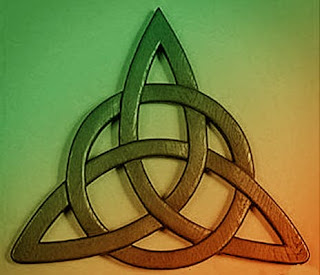
A Personal Trinitarian Statement

Image
  Athanasius, Basil, Gregory of Nazianzus, Gregory of Nyssa, Augustine, and John of Damascus were among those who urged church councils to adopt a set of beliefs regarding God, Christology, and the Holy Spirit. They would present their beliefs in concise, summary form. These figures are representatives of the systematic thrust of Nicene trinitarian theology in relation to other aspects of Christian faith. I thought I would put my mind to the same task. Such a contemporary appropriation of the meaning of trinitarian doctrine is to admit to the unavoidable “fusion of horizons” that attends every act of interpretation. Christian theology builds upon the ambiguous human experience of the divine, the sense that our finite and temporal lives connect to something much larger, and we are accountable for the lives we lead.  The Trinity is the way Christians identify God. This doctrine seeks a glimpse into the inner life of God, even though God is beyond our comprehension. God is Infini...

Athanasius and the Cappadocians

Image
  I am going to explore an important part of Christian theology as it developed its notion of the identity of the Triune God. I will do so with the help of Wolfhart Pannenberg, Karl Barth, Robert Jenson, Walter Kaufmann, and John Macquarrie. The work of Thomas Oden in "Classic Christianity" helped to guide my reading toward their insights. I will conclude with my attempt to compose a brief statement of the trinity as inspired by these authors, although I will say that sometimes the inspiration is to respectfully move against them. Athanasius (293-393) born in Alexandria, Egypt, would become secretary to the bishop. That position became the basis for his involvement in the Council of Nicaea in 325. He opposed a priest also from Alexandria, Arius. Athanasius formulated the homoousian doctrine, according to which the Son of God is of the same essence, or substance, as the Father. Arius, on the other hand, maintained that the Son was of a different substance from that of the Fath...